Search Mami Mozart

AFFORDABLE INSTRUMENTS

Showing posts with label kids. Show all posts

May 12, 2015

Artsy Momma's Insider Tips: 5 Easy Ways to Encourage Art, Music, and Theater with Your Children

5 Easy Ways to Encourage Art, Music, and Theater with Your Children - Fun and Affordable Arts Activities for the Family 

Encourage creativity in music, art, and theater, in your children with these fun activities for the whole family.

Many parents are discouraged from encouraging arts creativity in their children because they feel limited by their minimal arts experience. Try some of these fun arts activities with your children to encourage their creative growth in art, music, and theater.

1. Have a puppet show.
Whether you choose to make your own puppets with brown paper bags and paper scraps, or buy theater puppets from the local toy store, engaging in a puppet show with your children will encourage them to develop their imaginations, learn about dialogue and verbal interplay, help them develop linear story narratives and perhaps even encourage music skills through improvisational songs. Work on writing skills with older children by encouraging them to write a screenplay, complete with foley sound effects and even a music soundtrack.

2. Have a variety of noisemakers and inexpensive instruments around the house.
When your children are young, be sure to have a box full of fun noisemakers and instruments, from hand made tambourines and shakers, to pots and pans with drumsticks, to inexpensive toy instruments from the store. For older children and teens, have a spare guitar, drum set, or keyboard around and encourage them to jam out to their favorite music tunes. Even the video game companies have realized the importance of music, play, and the imagination, with Wii's new Wii Music, Guitar Hero, and even computer music programs like Mac's Garage Band.

3. Visit the park with a set of watercolors and an art sketchbook.
Give your child an art sketchbook or journal and encourage them to paint nature, life situations, or anything in their imagination. Watercolor sets are inexpensive, very portable, washable, and lend themselves to easy renderings of nature. The art medium is very forgiving, and is not as frustrating for younger budding artists. Remember to encourage the art of your children, and do not be negative and critical of their art attempts. Leave the criticism to their high school and college art teachers down the road. Your job as a parent is just to encourage their creativity and provide them a safe place to develop their art.

4. Go to local music concerts, art shows, and theater plays with your children.
Nothing will encourage your children more to engage in the arts than seeing a live music performance, speak with an artist at art show opening, or watching an exciting theater play. Community arts groups often have events for little to no cost, and sometimes professional arts venues will have discounted or free tickets available for school children and teachers.

5. Play a large variety of music styles in the home.
Most children are only exposed to what is heard on the radio or internet, the music their friends listen to, and music in video games and television. While there is some music of merit in the mix of popular culture, most of popular music is intricately chained to the sale of products often unrelated entirely with the music artist. Play a music variety in your home and encourage your children to listen to world music, jazz,classical music (and more than just Beethoven and Mozart), musicals (besides High School Musical), folk music, avant-garde music, traditional music of different cultures (East Asia, Latin America, etc.), and local musicians that have not made the Top 40.

April 6, 2015

Kids and Art - Teaching Elements of a Landscape

Simple ways to teach landscapes to children of any age in art class. 

When teaching children about any art subject, it is important to simplify the concept into small, palatable parts that are easy to comprehend. One way to do this is to break down different elements and terms into easy to manage segments using vocabulary and examples within the student's experience. Below are some simple ways to break down the elements of a landscape.
Landscape

Often I will ask my students, "What do you think a landscape is?" Unless the students have had previous art experience, they often give me blank stares and incorrect guesses. Then I ask, "What is land?" Hands shoot up, and students give me an example of land and the outdoors. Then I ask again, 

"What is a landscape?" Now that the correlation has been made between land and landscape, the students will understand that a landscape is a depiction of an outdoor scene.

Foreground, Background, and Middle Ground

I choose three students from the class and have them stand one behind the other from tallest to shortest. The farther apart they can stand, the better. I point out that the student standing in the back is the background (ex. a mountain, a faraway tree). The student in the middle is the middle ground, and the child standing in the front is the foreground. I point to each child in the row and have the class answer together "Background, foreground, or middle ground." Then we discuss what elements of our landscape would be in the background, foreground, or middle ground.

Basic Perspective
I ask the students to hold their hands close to their face and point out that the hand looks quite large. Then I have them hold their hand as far away as they can. The hand looks smaller. As a simple explanation of perspective, I tell my students that the closer an object is, the larger it appears and the farther it is, the smaller it appears. Then we discuss how this applies to our landscapes. A good example is how a faraway mountain seems so much smaller than a rock that is in the foreground.

Atmosphere
Young students do not always understand the concept of blending colors together. However, I do mention to them that the farther away an object is, the more muted the colors are since the atmosphere provides a sort of haze. We might then talk about how weather and sunlight would affect the color palette. Then we discuss various ways of blending colors, whether using acrylics, oil pastels, watercolor, or any other medium.

April 1, 2015

Fun Theater Improv Games for Kids: Dramatic Fun for Parties, Classroom, or Living Room

Fun Theater Improv Games for Kids: SUBHEAD: Dramatic Fun for Parties, Classroom, or Living Room


Dramatic play has always been an excellent way to encourage creativity in children and teens. Try some of these fun games at your next party, on a rainy afternoon, or in your classroom.

Theater and dramatic play has always been a fun and exciting way to encourage self-confidence, creativity, and cooperation in children and teens. These games do not require a lot of materials and can be modified by age group and number of children playing.


The Hot Seat

A single chair is set up in the front of the room. Child A sits in this chair. Child B approaches Child A and gives them a reason to leave the chair. The reason can be as silly as "Watch out! A killer pig is coming to eat you!" to "TRAIIINNNNNNNNNNNNNNNN!!!!" Child A quickly leaves the chair and Child B takes their spot. The game continues with the next student approaching the sitting child with another zany reason to leave the chair. This game is a lot of fun and is excellent as a warm-up activity for older theater groups. The game can be played organized or can be played "popcorn" style, where students approach the chair in no particular order.


Freeze with a Prop

A container full of random props is placed at the front of the classroom. Student A chooses a prop and begins to act out an impromptu scene with the prop. The main rule is that each prop has to become something else. (Ex., a broom cannot be used to sweep. The broom can be used as a baseball bat in an imaginary softball game). After a short time (usually a minute or so), Student B taps Student A on the shoulder. Student A freezes and Student B takes the prop and mirrors the exact position that Student A has. Student A sits down and Student B continues a new scene using the prop in an entirely different manner. This game works better with older children. Popcorn style leaves less dead space in the scenes, while taking turns encourages shy children to play.


Interpretive Dancer

Child A pretends to be a speaker from another country. As Child A begins speaking a mock dialect (mostly gibberish), Child B attempts to "translate" using interpretive dance. Things can get really nutty with this game!


Superhero Dance Party

A small box contains slips of paper with names of various superheroes. One child is the party host. Three or four students choose a slip of paper. The host pretends to have a party. Each child with the slip of paper "knocks" on the imaginary door and joins the party. Each guest must act like the superhero they chose, but cannot directly tell the host who they are. The host must guess which child is which superhero. The game ends when the host either guests all of the students or gives up. Then play begins again. With smaller groups of children, I let all of the children play each time. With larger groups, only four to five children should be playing at one time. Encourage students to really act out how the Hulk would drink a bowl of punch, how Spiderman might dance, or how Cat woman would open a gift.

February 17, 2015

SAVE SERIOUS CASH: Buying Second-hand Can Save You Hundreds a Year

SAVE SERIOUS CASH: Buying Second-hand Can Save You Hundreds a Year

Your family can save hundreds, even thousands, 
of dollars a year by buying items secondhand.

Your family can save hundreds of dollars a year by buying items secondhand through thrift shops, consignment shops, and online vendors. While there are many items that need to be purchases new, 
many goods and clothing serve their purpose just as well the second time around.

Online Vendors

Not only can you visit your neighborhood thrift shop for some serious bargains, you can also check out the latest bargains online at stores like Ebay.com, shopgoodwill.com, America's Thrift Stores.com and overstock.com.


Belts, Scarfs, and Ties

Why spend $30 on a belt or tie when you can purchase them for less than $5 each at most thrift shops? Inspect the belts for cracks in the leather and check scarfs/ties for any stains or rips. Wash/clean them when you get home, and no one will know the wiser.


Jackets, Sweatshirts, and Sweaters

Buy your winter clothing during the summer at local thrift shops. You will find name brand jackets going for a fraction of the cost, cashmere sweaters, and tons of sweatshirts for hanging around the house. Considering that many college sweatshirts can go for $20 each, spending $3 for your favorite university's sweats can save you some serious spending money. Always check sweaters for wear and stains and inspect all pockets of a jacket for holes and wear.


Vintage Jewelry

Gawdy 80s jewelry seems to have made another comeback, and what better place to find those oversized bangles, bands, and earrings than the local thrift shop? The best bargains are found in thrift shops that have bins of jewelry for less than a dollar apiece. Some vendors will separate finer jewelry behind a locked case, but even those items will be on sale for less than a quarter of real cost. Remember to clean out earrings with alcohol. Use a cleaner to make gold, silver, and brass necklaces and bracelets look like new.

Business Suits

Need a large array of business suits but cannot afford spending $200-$400 for a suit? With a little detective work, you can find quality business jackets for less than $20 each. Be sure to dedicate an afternoon to finding suitable work clothes. Finding a complete set is difficult, and you may have to spend time finding matching items. Blouses and button-up shirts abound at thrift shops, as do ties.


Children's Playclothes

Though it is difficult to find baby clothing at most secondhand shops, clothing for toddlers up to teens fill aisles and aisles at the store. Buying thrift for toddlers makes sense, since toddlers grow quickly and have a tendency to dirty clothes quickly.


Teens

For teens, consignment shops are a better bet for finding trendier clothing. Consignment shops differ from thrift shops in that they often have name-brand goods and the previous owner of the item receives a percentage of the profit of the item. Regular thrift shops usually have a stock of jeans and t-shirts for everyday use.


Kitchen Items

Plates, dishes, cups, platters, etc., can all be found at the thrift shop for a miniscule cost. An added bonus? Many dish sets at the thrift shop are of much better quality than comparably priced items at big discount stores. There is a broad array of utensils and random items like bread boxes, butter dishes, and various salt and pepper shakers. Wash everything well in bleach, and you have a new complete dish set for a third of the price!


Decorations

Thrift shops and antique shops are full of amazing one-of-a-kind treasures. Authentic items from Europe to Africa to Asia abound, as does authentic Americana items, artwork, glasswork, vases, lamps, and vintage items. Do some research on sites like the Antiques Road Show.com, and you may find a treasure that is worth hundreds.


Buying secondhand has other added bonuses. Buying locally instead of from large chains that purchase and ship jobs overseas will infuse your local economy with capital that will be reinvested in the community with jobs and purchases of goods. Many thrift shops are directly linked to local charities that are in desperate need during these harsh economic times. Additionally, you will be able to provide for your family for a fraction of the cost. Happy bargain hunting!

January 5, 2015

How to Save Money when You Have Kids: Good Parenting During Tough Economic Times

How to Save Money when You Have Kids: Good Parenting During Tough Economic Times 

Parenting tips that will help your family grow closer during tough financial times 

Kids value your time over the latest gadget 
Children cherish time with their parents more over the latest i-pod, fashion doll, or video game that came out in time for the holiday rush. Adults never lament that they never had that cool remote-controlled car or the newest shoe sensation as a child. What is heard again and again is the lack of time spent with a parent who was either absent or was working too hard to spend time with their child. Make a concerted effort to double the time you spend with your children each week. They will be so excited that mom or dad went with the to the movies, a picnic, or park with them, that they will not gauge your love for them by the toys in their closet. Your children will know that you love them by the time you spend with them.

Back to the basics
Despite all of the brouhaha over the latest electronic educational toys, give a child a ball and a field, and they will be entertained for hours in good, healthy outdoor fun. Sidewalk chalk, bubbles, and jump ropes are other inexpensive childhood staples that have withstood the test of time. Even my savvy inner city students looked forward to the hour each day when they could enjoy the sunshine safely and play with their friends. Other fun games included hula hoop and frisbee. All of these items can easily be found at the nearest dollar store, and the children get some exercise to boot!

Turn the TV off
Children's programming on major network stations targets young audiences for a barrage of new items that are expensive, unhealthy, and sometimes not age-appropriate. Sit down with your child for Saturday morning cartoons and you will see dozens of adds for junk food and candy, sassy fashion dolls, and expensive electronic gadgets that will break after a week of use. These ads not only influence children, but teach them a set of values based on the gaining of faddish material goods. Limit the amount your child watches television and spend quality time with them. Even limiting the number of televisions in the household to one in the family room, instead of one in each bedroom, will not only save you money in cable and television sets, but will automatically ensure automatic parental supervision and less television watching. This also may pertain to computers, which are soon replacing televisions as the entertainment of choice.

Keep communication open
When my parents went bankrupt, they sat my sister and I down and explained our new economic situation in simple terms. They allowed us to voice our concerns (I was about 12, my sister 8). Together, as a family, we decided that certain things - new clothes and toys, private school, and the cars - would have to go if we wanted to save our house. Because they explained the situation to us, we did not complain when we had to shop at Goodwill, when we ate spam and tuna every night for months, or when going to the mall just involved window-shopping. We learned to appreciate the sacrifices our parents made and became better people for it. Be honest with your children about finances.

Good nutrition

During tough economic times it is difficult to keep families well fed. Children and teens seem to need a boundless amount of fuel to keep going, and mounting bills continue to eat into the family grocery budget. Although the temptation may be to stock up on boxes of easy-to-make meals and canned goods, there are ways to save money and still provide good nutrition for your children. Farmer's markets, buying in bulk, brown bag lunches, and cooking up large pots of filling staples (chili, navy bean soup, etc.) are just some ways to keep your kids healthy and full. See the links listed below for ways to save on food costs.

Leading by example
Children learn by emulating their parents. Demonstrate strong character, a loving heart, and wisdom, and your children will follow suit. Avoiding wasteful spending at home and valuing precious quality time will help your family grow, no matter what the financial hardship.

December 29, 2014

Fun and Affordable Art Activities for Kids: Creativity that Won't Cost You a Bundle!

Fun and Affordable Art Activities for Kids: Creativity that Won't Cost You a Bundle!

Fun and exciting arts activities for kids using everyday household items.

Creativity does not need to cost a bundle. These fun ideas are great for the classroom, home, a stormy afternoon, or even parties. Everyday items such as ice cube trays, magazines, clothes pins, flour, and left over holiday tissue paper can be the tools for exciting creative expression in your household or classroom. Try these fun and inexpensive ideas with your children today.

Abstract Ice Paintings

Supplies: Non-toxic paint, ice cube trays, paper, crayons and water

Fill each the ice cube tray with 3/4 water. Add paint to each tray until each section is filled to the top. Use a spoon to stir in the paint. Freeze trays. Have the children draw simple pictures on large sheets of paper. Once the "paint cubes" are ready, have the students paint a wash of color over their drawings. The drawings will "magically" show up through the ice color wash. Set the pictures to dry and hang for all to see!


Silly Self-Portrait Collage

Supplies: Magazines, markers and/or color pencils, paper, glue, scissors

Each child draws an oval for their face. They can use color pencils for shading in skin tones, freckles, and/or hair. Using old magazines, each child can recreate their own face (and body) by using the parts from people in the magazines. Kids have a lot of fun mixing and matching eyes, ears, noses, feet, hands, etc. and seeing the zany results. You can even go digital and try using a computer for some zany results!


Easy Stretchy Salt Dough Sculptures

Recipe: 2 Cups of white flour, 1 cup of salt, approximately one cup of water (as needed)

Have the kids help you mix the salt and flour, as you slowly add water. When the flour comes off the sides, it is ready for sculpting. After creating a fun sculpture (some ideas are animals, bowls, or ornaments), you can harden the sculptures by either leaving it in the sun for a few days or baking at a low temperature for 20-45 minutes. Baking time depends on the thickness and size of the sculptures. Once the sculptures are hard, kids can decorate the sculptures using paint, glue, and markers.


Holiday Tissue Paper Paintings

Supplies: Gift Tissue Paper in Vibrant Colors, Water, Paper

Have lots of leftover birthday and holiday tissue paper? You do not have to throw gift bags of paper away. Instead, recycle it for some painting fun! Dip small portions of bright tissue paper in water and use it to paint on large pieces of paper. Kids will have a great time expressing themselves!


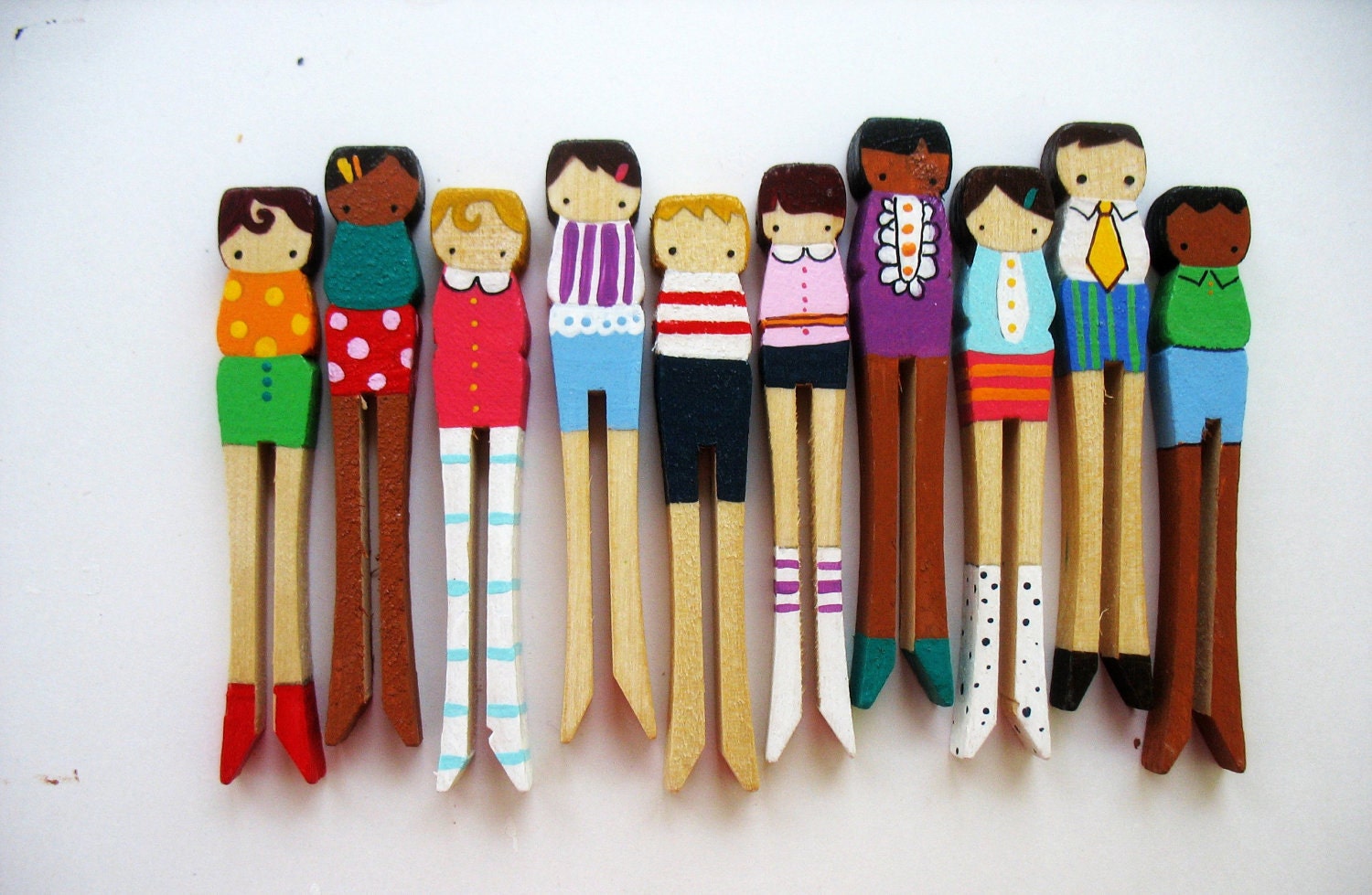
Clothes Pin Dolls

Supplies: Wooden Clothespins (large preferably), yarn, glue, markers, pipe cleaners, and fun items for decoration (stickers, googly eyes, buttons, etc.)

Large wooden clothes pins can easily be transformed into entire doll families. Use the round knob as the head. Kids can wrap pipe cleaners around the middle for arms. After attaching arms, coloring the entire clothespin with markers (or even paint) can change the clothes pins into superheroes, a family, animals, or whatever your child's imagination can think of. Extras like yarn, googly eyes, or buttons can be added for extra decoration.

----
Baby Shoes: A Picture Book
Thank you for visiting Mami Mozart! I hope that you find the resources here helpful. I'm always updating the site. I'm an award-winning composer and homeschooling mom that loves to find creative ways to learn that are affordable and most of all FUN! Explore the site! Share your creative ideas in the comments below.

Check out my Kindle kid's books